
Advancing Clinical Science: The PCSAS Blog
- Accreditation Updates for Clinical Psychology Programs (4)
- Building Trust in Research Practices (1)
- Clinical Psychology Education Structure (1)
- Clinical Psychology Training (4)
- Community Engagement in Psychology Research (1)
- Diversity, Equity, and Inclusion in Psychology Training (2)
- Ethics in Psychological Research (2)
- Financial Challenges in Psychology Training (1)
- Graduate Student Well-Being (3)
- Mental Health and Therapy Insights (3)
- Mentorship and Career Guidance (4)
- Mentorship and Communication (3)
- Navigating Graduate School (5)
- Newsletter (101)
- Open Science in Psychology (1)
- Predoctoral Internship Preparation (3)
- Professional Development for Therapists (6)
- Psychology Graduate Student Resources (8)
- Psychology Services (1)
- Psychology Training Reform and Policy (1)
- Sleep Health and Academic Life (1)
- Stress Management for Students (2)
- Uncategorized (6)
- Work-Life Balance in Academia (2)
Child Development (5) Clinical Psychology (40) Clinical Science (25) Clinical Science Training (7) Clinical Training (7) COVID-19 (5) Diversity in Psychology (7) Early Childhood (4) Evidence-Based Practice (6) Gabriela Memba (4) Graduate Education (6) Graduate Student Resources (7) Graduate Training (9) Higher Education (6) Internship Preparation (5) Mental Health (14) Mental Health Disparities (8) PCSAS (11) PCSAS Accreditation (5) Professional Development (11) Professional Standards in Psychology (4) Psychological Research (10) Psychological Science (4) Psychology Education (11) Psychology Training (11) Psychology Training Programs (5) Social Justice (5) Social Justice in Psychology (5) UCLA (4) Work-Life Balance (6)
-

Alan Kraut Farewell Letter
by Robert W. Levenson, University of California, Berkeley As many of you know, Alan Kraut is stepping down after serving for six years as the Executive Director of PCSAS. This is truly a bittersweet moment for us all. On the one hand, we will greatly miss Alan’s steady hand, tireless energy, sophisticated knowledge, and sense of fun, all of which have helped define the culture of PCSAS. But we also respect his desire to move on to his own next…
-

Training the Next Generation of Clinical Psychologists: How Do We Move the Field Forward?
by David A. Sbarra, Ph.D., University of Arizona & Howard Berenbaum, Ph.D., University of Illinois at Urbana-Champaign Let’s begin with a thought experiment. Close your eyes and try to forget everything you know about what clinical psychologists do and how they are trained. Forget clinical hours. Forget internship. Forget classes, requirements, advisors, and advisees. Just let your mind focus on one incredibly important but ugly fact: As a scientific field and an applied profession, clinical psychology has not made, over the…
-

Chatbots: The Future of Psychotherapy?
by Linnea Sepe-Forrest, Indiana University Bloomington In an ideal world, there would be enough therapists to serve everyone’s needs across the world. Therapists would not experience any burnout or require high compensation for their services. While this sounds like an impossible feat, many companies are attempting to address unmet therapeutic needs by providing psychotherapy through artificial intelligence (AI) devices known as chatbots. A chatbot uses natural language processing to interpret messages and respond to clients, thereby simulating human conversation (Dale, 2016). You…
-

The Conflation of Race and Ethnicity: A Psychological Misconception
by Katrina Rbeiz, Vanderbilt University After conducting multiple clinical assessments and taking psychological surveys online, I kept coming across the same issue of ethnicity and race being treated as the same measure of identity. ‘Ethnicity’ boxes would sometimes only include racial categories, and ‘race’ boxes would dismiss a few identities altogether, relegating any missed categories as ‘other.’ In some of the worst cases, I’ve noticed the distinguishing of racial groups as ‘white’ vs. ‘non-white,’ deeming ‘white’ groups to be the majority,…
-

The Art of Psychological Science: Tips on How to Talk About Manualized Treatments
by Brendan Whitney, M.A., University of Iowa In the field of psychological practice, there is often a debate over whether clinical practice is an “art” or a “science.” This generally arises when discussing the utility of “manualized” or “evidence-based” treatments. For example, some clinicians associate manualized treatments with being “cold”, and fear that their use (i.e., strictly following them “by the book”) may dampen the therapeutic alliance and reduce a clinician’s ability to work flexibly to address their clients’ unique needs…
-
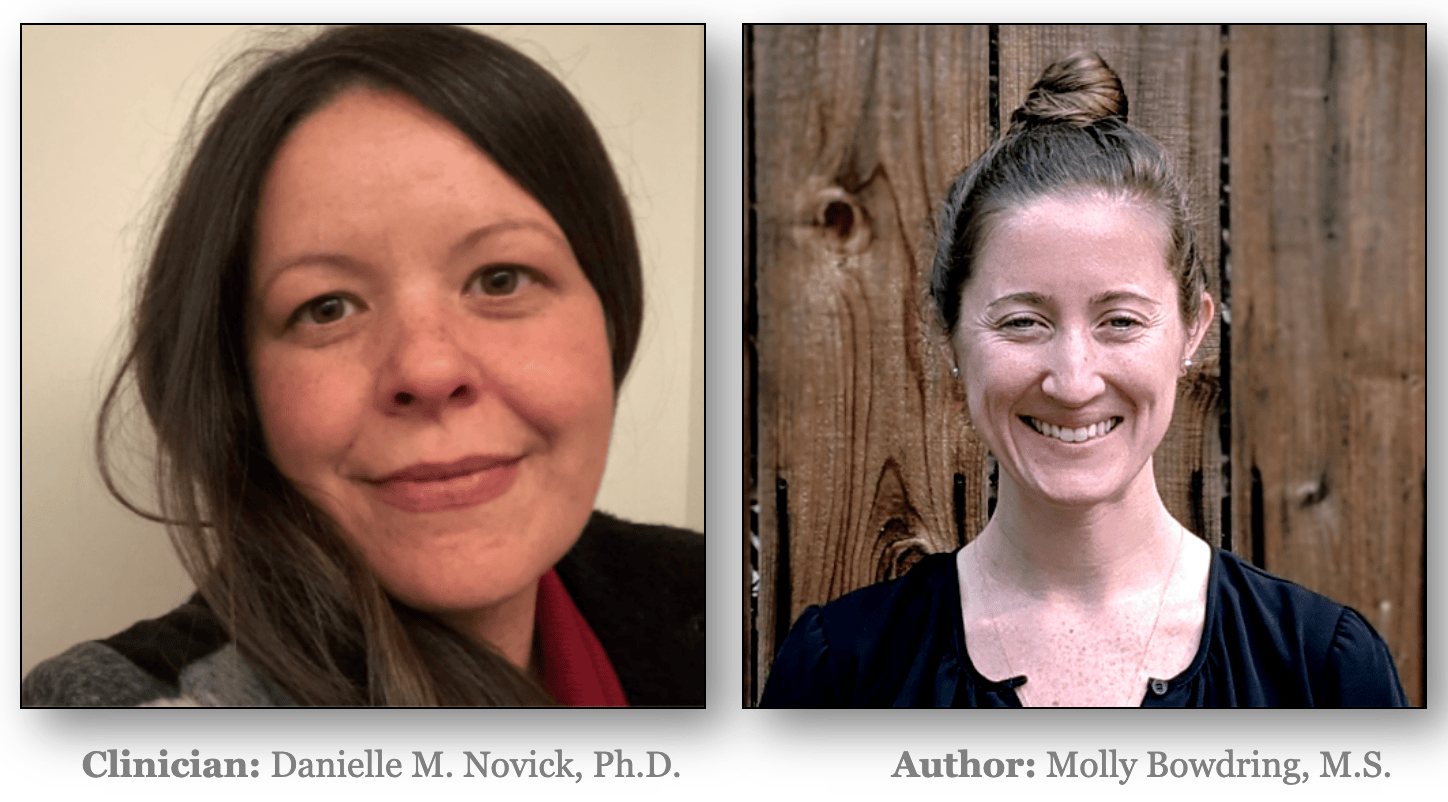
Clinician History Interview: Danielle M. Novick, PhD
by Molly Bowdring, M.S., University of Pittsburgh For many graduate students, the decision to pursue a clinical or research career is a difficult one. For some though, it is a clear choice. When Dr. Danielle M. Novick was a graduate student at the University of Pittsburgh (2002-2010), she was excitedly intending to pursue a tenure-track research career. Though Danielle began her undergraduate career at Hampshire College as a film major, she soon switched to cognitive science after discovering her love of…
-

Harnessing Sleep to Improve Academic Performance
by Laila Volpe, SRI International and Incoming Doctoral Student, University of Washington When faced with an overwhelming amount of work, students often feel as if there aren’t enough hours in the day. To compensate, many choose to stay up later or wake up earlier, with some even pulling “all-nighters.” One study on sleep patterns in college students found that 20% reported staying awake all night at least once in the prior month, and 35% reported staying up until 3 a.m. at…
-

NSF GRFP Application Advice
by Julia Spandorfer and Rachel Walsh, Temple University The National Science Foundation Graduate Research Fellowship (NSF GRFP) is a prestigious, 3-year fellowship open to students in STEM fields. Awardees are given a generous stipend for three years and their degree-granting institution is also given a cost-of-education allowance to put towards tuition. However, for clinical psychology students, the process of applying for a GRFP can be like walking a tightrope. The NSF GRFP FAQ’s state that your graduate school must not be…
-

Mental Health in Communities of Color Emerging from the Pandemic
by Erika Roach, M.A., University of California, Berkeley Mental Health in Communities of Color Emerging from the Pandemic The COVID-19 era has been challenging on multiple fronts. While some degree of normalcy is emerging, so too are the mental health ramifications of the past year. As Dr. David Williams, Harvard Professor of Public Health, said, “There is a vaccine for the COVID-19 virus, but there is no vaccine for mental health.” 1 A recent survey conducted by the National Center for…
-

Tips for Getting a Predoctoral NRSA: Perspective from a Woman Scientist (and Her Imposter Syndrome)
by Parisa Kaliush, University of Utah If you’re like me, you entered your clinical psychology doctoral program with serious doubts about your potential as a researcher. As a woman-identified graduate student, I was acutely aware of longstanding wage and status disparities between men and women psychologists. I convinced myself that I would earn my Ph.D., become a full-time clinician, and only read about research. This self-proclaimed academic journey stemmed not from a belief that clinical work is easy, but that I…
-

Developing a Career as a Practitioner Who Conducts Research
by Jacqueline B. Persons, Ph.D., Oakland Cognitive Behavior Therapy Center and University of California at Berkeley I’m writing this article to describe my career path as a clinician in private practice who conducts research, with a view to encouraging trainees and graduates of Psychological Clinical Science Accreditation System (PCSAS) programs to consider following it. My career has been extraordinarily rewarding, and I’m proud of the contributions to psychological science I’ve been able to make. PCSAS training will give you a solid…
-

APS and PCSAS: Bringing Science to Clinical Training A Brief Overview of a Powerful Partnership
by Sarah Brookhart When I say “accreditation” to just about anyone, there’s a good chance their eyes will start to glaze over. In fact, your eyes are looking a little glossy reading this. Accreditation, however, has been at the forefront of an important and exciting new movement centered around the clinical science model of training embodied by the program that you are part of as a student in a PCSAS-accredited program. The Association for Psychological Science (APS) has been a significant…
-

Using a Trauma-Informed Lens for Understanding Experiences of Discrimination
by Keisha D. Novak, Adilene Osnaya, Allycen R. Kurup, & Kelly L. LeMaire, Purdue University Racism, sexism, heterosexism, and other prejudicial attitudes pervade health and mental health care (U.S. Department of Health and Human Services, 2001; Carter, 1995, 2005). For example, racial disparities have persisted for decades such that Black, Indigenous, People of Color (BIPOC) face myriad barriers to affordable and appropriate care (Agency for Healthcare Research and Quality, 2018). Poor quality of care may be attributed to reduced access to care,…
-
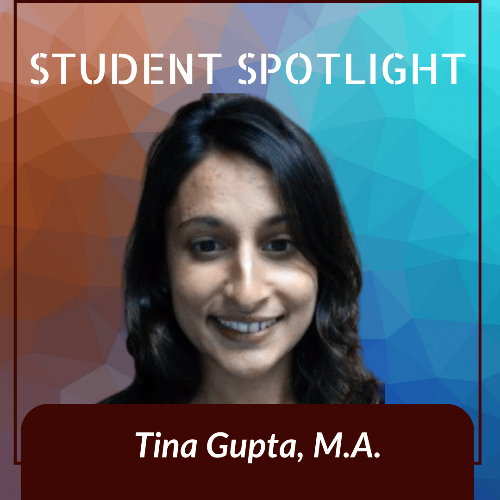
Student Spotlight: Tina Gupta
by Julia Case, Temple University Tina Gupta, M.A., is a 5th year graduate student at Northwestern University, working with Dr. Vijay Mittal in the Adolescent Development and Preventive Treatment Program (ADAPT). Tina was nominated for our Student Spotlight by a peer, Hollen Reischer. Here’s what Hollen said about why she nominated Tina: “I nominated Tina because she is a very well-rounded, dedicated, caring scholar and colleague. In addition to approaching her clinical work as both a clinician and a scientist,…
-
Student Wellness Initiatives in PCSAS Programs
by Molly Bowdring, University of Pittsburgh Graduate students are at significant risk for mental health issues. One estimate suggests that compared to the general population, graduate students are more than six times as likely to experience depression and anxiety (Evans et al., 2018). Clinical psychology trainees are, unfortunately, not immune to this problem (El-Ghoroury et al., 2012; Rummell, 2015; Peluso et al., 2011). One way in which trainee wellness can be supported is through program sponsored wellness initiatives (e.g., Drolet &…
-

Post-doc Spotlight: Shannon Blakey, PhD
by Samantha Hellberg, UNC Chapel Hill Dr. Shannon Blakey is a postdoctoral fellow at the VA Mid-Atlantic Mental Illness, Research, Education and Clinical Center, a translational research center at the Durham VA Health Care System. She received her PhD in Clinical Psychology from the University of North Carolina at Chapel Hill (UNC) after completing her clinical internship at VA Puget Sound in Seattle. In her current position, she spends approximately one-third of her time engaged in health services and approximately two-thirds…
-
Promoting Diversity and Inclusion in Clinical Psychology: One Program’s Early Initiatives
by Allycen R. Kurup, Adilene Osnaya, Keisha D. Novak, & Kelly L. LeMaire, Purdue University In response to racial unrest, clinical psychology departments are likely beginning to implement myriad initiatives to advance diversity and inclusion (D&I) within their graduate training programs and may be seeking examples from other programs. This article details initiatives implemented in a clinical psychology doctoral training program at a predominantly White Midwestern public university. We review both the challenges and positive outcomes of implementing these initiatives…
-
Translating Neuroscientific Methods into the Psychology Clinic
by Brett Schneider, University of Wisconsin-Madison Researchers investigating the neural underpinnings of mental illness have been developing tasks designed to capture transdiagnostic symptomology for decades. However, little to none of this work has improved the diagnosis or treatment of mental health disorders (Rogers, 2017). In this article, I will describe how clinicians and researchers can utilize objective measures to aid psychiatric diagnosis and treatment by following a neuropsychological approach to diagnosis. Psychology and psychiatry clinics typically evaluate clients through a combination…
-

Understanding the Role of a Research Consultant: An Interview with Dr. Sarah Kleiman
by Kathryn Coniglio, M.S., Rutgers, The State University of New Jersey Doctoral students likely give considerable thought to future career goals. Some pursue tenure-track faculty positions while others opt for clinical practice. Unlike many other pre-professional graduate programs that expose their students to a wide range of potential career trajectories, however, clinical psychology PhD programs appear to be less transparent about alternative paths for professional development. To this end, I interviewed Dr. Sarah Kleiman, a research consultant for university, governmental, nonprofit, and…
-
Meeting Requirements for Diversity, Ethics, and History
by Kathleen W. Reardon, Ph.D, The Family Institute at Northwestern University Recent events, drawing renewed attention to racial inequities in our society, have prompted much-needed conversations about diversity and inclusion initiatives in clinical psychology training programs. Clinical Psychology programs that are accredited by the Psychological Clinical Science Accreditation System (PCSAS) or the American Psychological Association (APA) are required to train students in the areas of ethics and diversity. I faced the task of designing a syllabus for a course to…
-

Meaningful #Activism: How Psychologists and Trainees Can Use Online Platforms and Social Media to Fight Racial Injustice
by Eve Rosenfeld, M.A., University at Buffalo, SUNY In light of recent instances of police brutality against Black Americans, many outraged psychologists and trainees are faced with a dilemma. Do we speak up against police brutality and potentially face professional repercussions? Or do we protect our careers by staying silent about racial injustice? Traditional wisdom says that we remain “apolitical” in professional spaces. But this culture of silence has allowed racial injustice to percolate through the academy. Psychologists and psychologists-in-training are viewed as…
-

What is the APA? A Brief History
by Julia S. Yarrington, M.A., University of California, Los Angeles The American Psychological Association (APA) has become an increasingly contentious body in the field of psychology. Although the APA holds a number of responsibilities, the organization is perhaps most salient to students and faculty through its role in establishing professional standards for psychologists. In keeping with the APA’s goal to uphold these standards, the organization has implemented a system of accreditation for clinical psychology programs, expectations for curriculums in these…
-

Selflessly Selfish: Barriers and Recommendations for Self-Care
by Tyler McFayden, M.S., Virginia Tech The day to day of a graduate student is, overall, markedly selfless– we care for our lab, conduct work for our mentor, provide mentorship to undergraduate students, counsel our cohort, and primarily provide clinical services to those in need in our communities. Graduate studies are full of pressures to succeed, academic challenges, heavy workload, long hours, exhaustion, constant evaluations, and especially for clinical psychologists in training, it also entails emotionally-exhausting clinical training. Clinical psychology…
-

Current and Anticipated Mental Health Effects of COVID-19
by Stephanie L. Haft, B.A., University of California, Berkeley Previous research has demonstrated that pandemics carry a heavy psychological toll. Consistent with these findings, in the context of the current COVID-19 pandemic clinical scientists are witnessing an escalation in mental health issues. This increase in both the severity and prevalence of mental health concerns is expected to extend beyond the end of the pandemic and associated restrictions. Understanding the etiology and manifestation of mental health issues related to COVID-19 can…